How can Nordic enterprises work effectively with a Vietnam delivery team?
Treat a Vietnam-based team as a managed delivery partner for defined outcomes, not simply as a source of lower-cost developer hours. Establish technical leadership, acceptance criteria, security controls and a predictable handoff with the Nordic team. Use the time difference for asynchronous progress where it fits, while keeping production approvals and business decisions with the people authorized to make them.
Distributed delivery can extend a Nordic organization’s engineering capacity, but a team’s location does not establish its quality, security or continuity. Buyers need evidence of how the proposed team works, how changes are reviewed, who owns incidents and how knowledge remains available to the customer.
Position the engagement around a managed pod
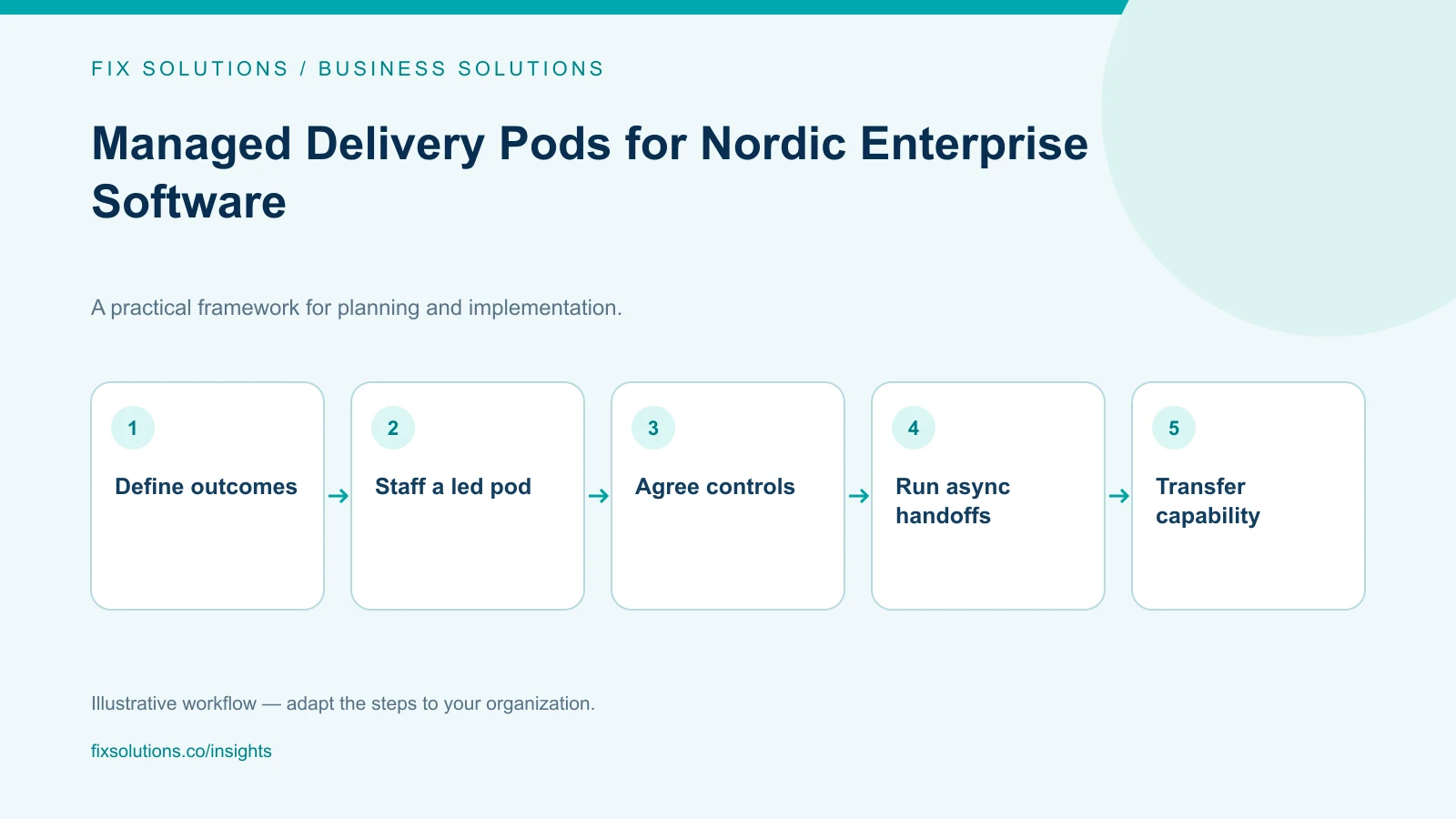
A delivery pod is a stable team organized around a defined product area, service or backlog. Depending on scope, it may include software engineers, QA specialists, a technical lead and solution architecture support. The exact roles should follow the work; adding senior titles without decision authority does not create oversight.
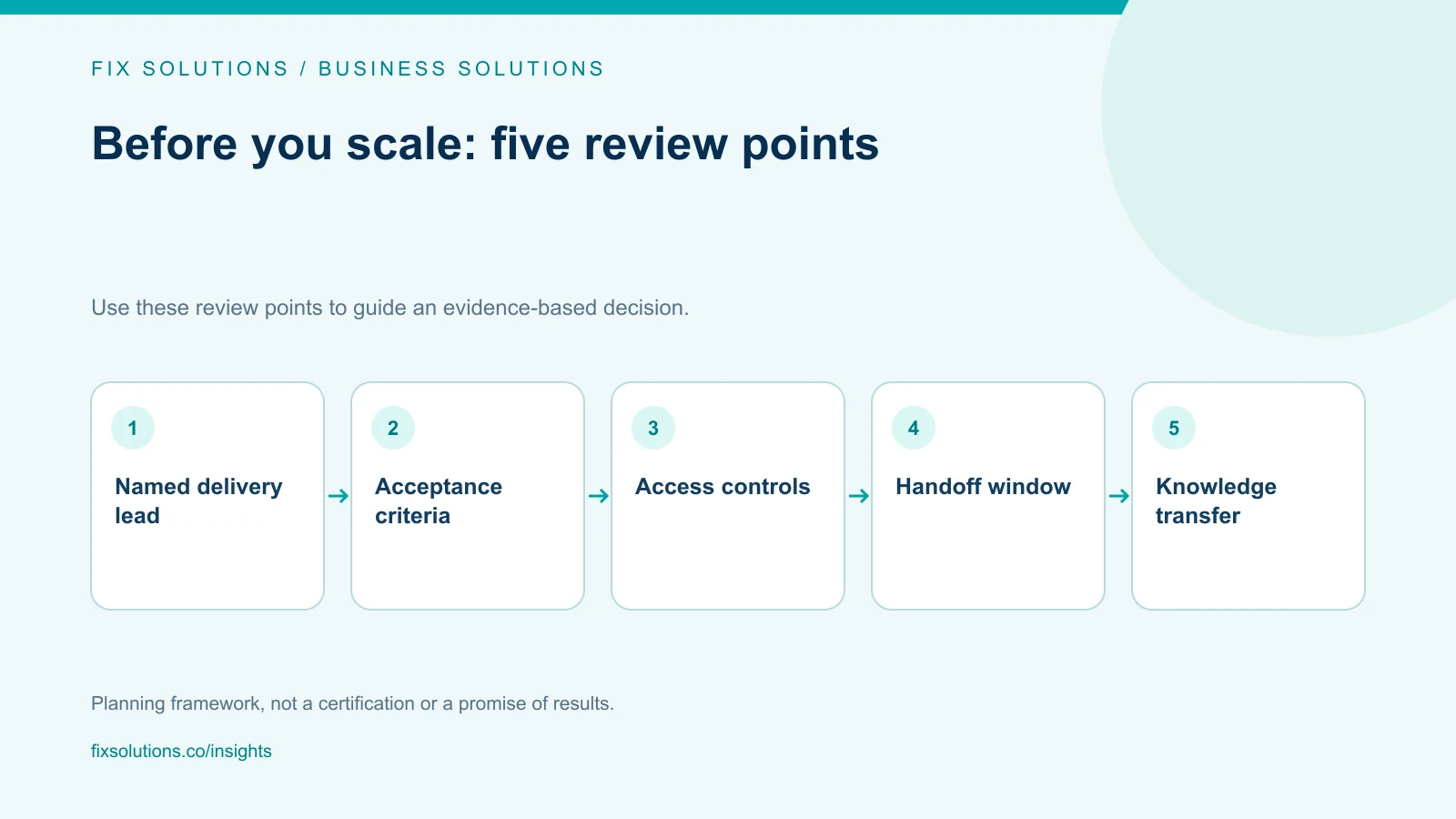
Define responsibilities explicitly. The pod can own implementation, peer review, test evidence, documentation and agreed delivery reporting. The Nordic client should retain product priorities, domain rules, risk acceptance and decisions about customer impact. Name who approves architecture changes, production releases, access requests and exceptions.
Agree on what “ready for handoff” means. It can include passing automated checks, peer review, dependency and configuration review, test results, deployment notes, known limitations and rollback instructions. Do not promise that an internal review guarantees defect-free software. Make the review process, evidence and accountability clear instead.
Measure progress through accepted outcomes and quality signals, not headcount. A small initial engagement can test backlog clarity, review turnaround, rework, incident handling and communication. Include a decision point to adjust the model, expand scope or transition the work back in-house.
Offer care and modernization as a governed service
An application that is important to daily operations may need routine bug fixing, dependency updates, API changes, test improvements and technical-debt reduction. These are legitimate engineering needs, not lesser work than greenfield development. A care retainer can reserve capacity for a defined system and backlog, with service expectations matched to actual staffing and access.
Separate planned maintenance from incident response. Specify supported systems, severity definitions, response windows, coverage hours, escalation contacts and customer-side dependencies. A 24/7 response commitment requires an explicitly staffed and funded on-call model; it should not be implied by a retainer that covers business hours.
For modernization, prioritize changes that reduce a specific constraint. This might mean extracting a stable interface, improving test coverage around a risky workflow, replacing an unsupported dependency or moving a bounded capability behind an API. The “strangler” pattern can help incrementally replace selected behavior around a legacy application, but it requires a clear routing boundary, data strategy and rollback plan. Avoid promising a rewrite-free migration or zero downtime unless those claims are supported by the actual architecture and implementation plan.
Track maintenance and modernization work separately enough to show trade-offs, while keeping them under one service owner. Agree how emergency fixes affect planned work, how backlog priority changes are approved and how technical debt is recorded. This gives the client visibility without forcing every small task into a separate procurement cycle.
Make the time difference useful—with explicit handoffs
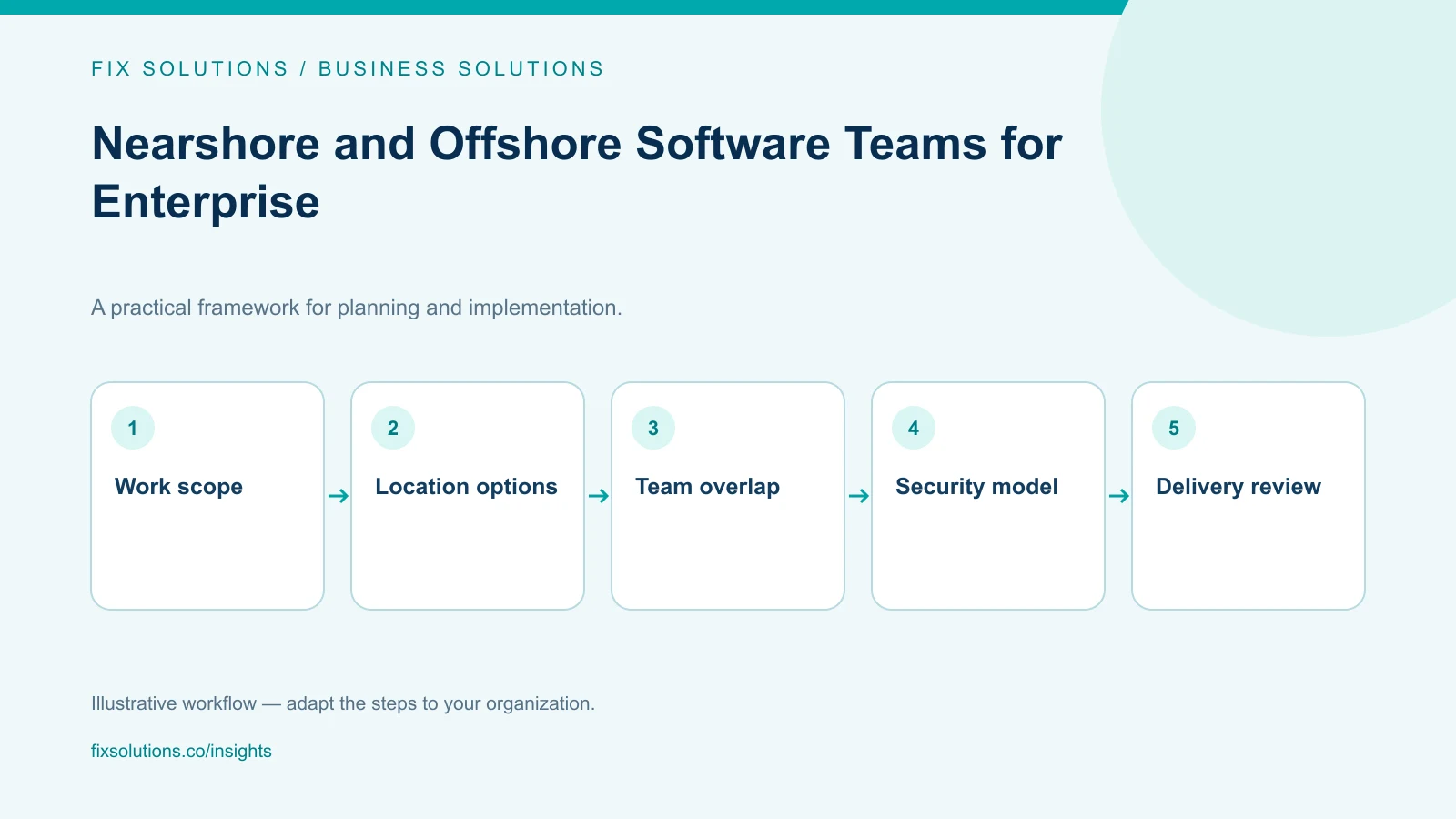
Vietnam is UTC+7. Denmark, Norway and Sweden generally use UTC+1 in winter and UTC+2 during daylight-saving time; Finland follows the same seasonal offset. This usually creates a five- or six-hour difference. Iceland does not observe daylight-saving time and is generally UTC+0, so its overlap differs. Confirm local calendars and clock changes when planning delivery.
The time difference can create an asynchronous work window. A Nordic product owner might provide an approved ticket, design decision or test case before the end of their day. The Vietnam team can investigate or implement it, record evidence and questions, and return a review-ready change for the next Nordic morning.
This “follow-the-sun” sequence works only when tasks are sufficiently clear and the team can make progress without inventing requirements. Define handoff fields: objective, acceptance criteria, dependencies, environment, test data, owner and escalation route. Maintain a small overlap window for clarifications and use shared issue tracking, code review and decision records as the source of truth.
Do not equate asynchronous progress with automatic overnight production deployment. Release windows, approvals, monitoring and rollback must follow the customer’s operational controls. Some work should wait for a Nordic decision rather than proceeding on an assumption.
Demonstrate security and compliance responsibilities
Start with the client’s actual data and threat model. Limit access to the systems and records needed for the task, use approved identities and endpoints, protect secrets, log privileged activity and revoke access when roles change. Define where code, test data and support logs are stored and who can access them.
GDPR and NIS2 obligations depend on the organizations, services, data flows and legal roles involved. A vendor cannot make a customer compliant merely by providing a software team. The GDPR text and the NIS2 Directive are primary legal references; involve the client’s legal, security and procurement teams to determine applicable obligations and contract terms.
Be precise about assurance claims. State certifications only when the contracting entity, scope and certificate status can be verified. Otherwise describe the controls and evidence that can actually be provided, such as code-review records, dependency reports, access reviews and incident procedures.
Preserve capability and continuity
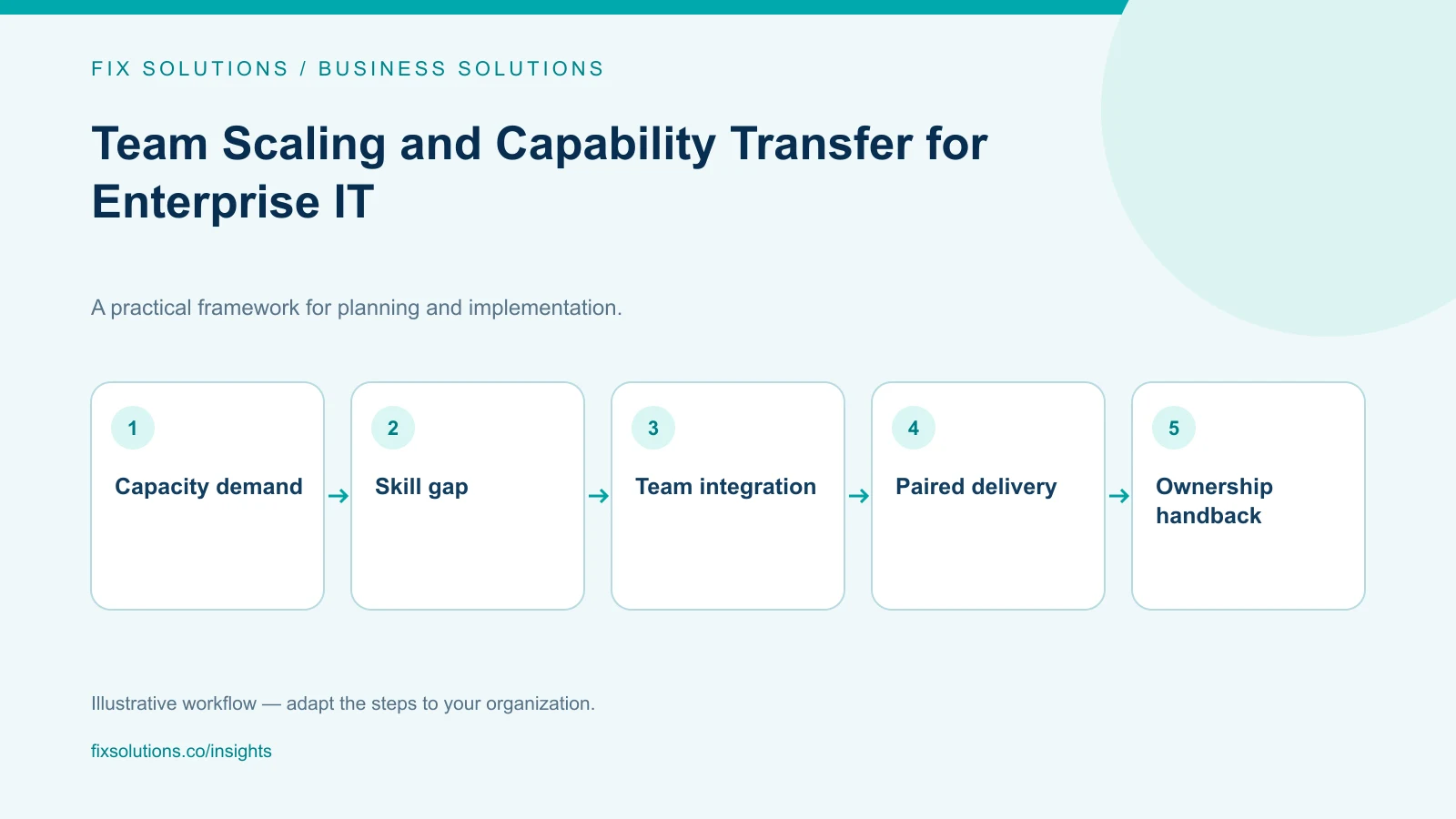
Use company-controlled repositories, build pipelines, documentation and issue tracking wherever possible. Pair pod members with Nordic counterparts on important decisions, keep runbooks current and make onboarding repeatable. A delivery relationship should include a plan for staff changes, open incidents and eventual handback.
Test transfer through practical tasks. Can an internal engineer reproduce a build, deploy to a test environment, interpret an alert and update a key integration? A walkthrough is useful, but a receiving team performing the workflow is stronger evidence. Define transition support and access removal before a contract ends.
Frequently asked questions
Is a managed pod just staff augmentation with a different name?
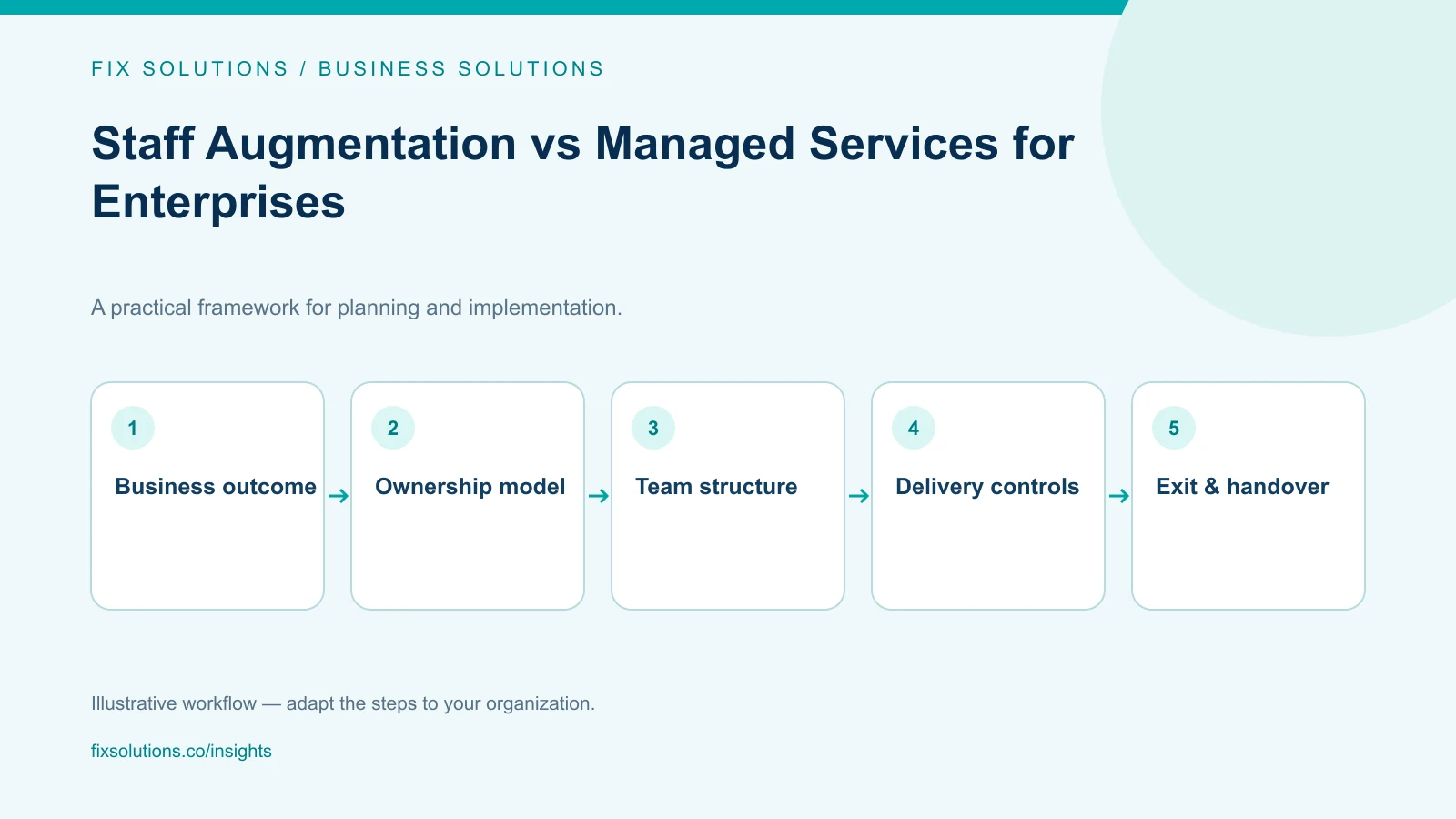
Not necessarily. The difference is in responsibility and operating practice. Specify who leads delivery, owns quality checks, accepts work and handles escalation; the label alone does not establish accountability.
Can Vietnam teams provide 24/7 incident support?
Potentially, if the service has an explicitly staffed rota, severity model, escalation coverage and agreed response commitments. Confirm the operating plan and contract rather than assuming it is included.
Does working overnight guarantee faster delivery?
No. It can reduce idle time for well-defined tasks, but unclear requirements and approval dependencies can create rework. Measure handoff quality and accepted outcomes before scaling the arrangement.
Build a delivery relationship around evidence
Nordic-Vietnam collaboration is strongest when the customer can see who owns the work, how quality and security are checked, and how the team will preserve or return system knowledge. Start with a bounded service or modernization backlog, agree the controls and review results before expanding. FIX Solutions can help scope an enterprise engagement through IT development services.