
Artificial Intelligence
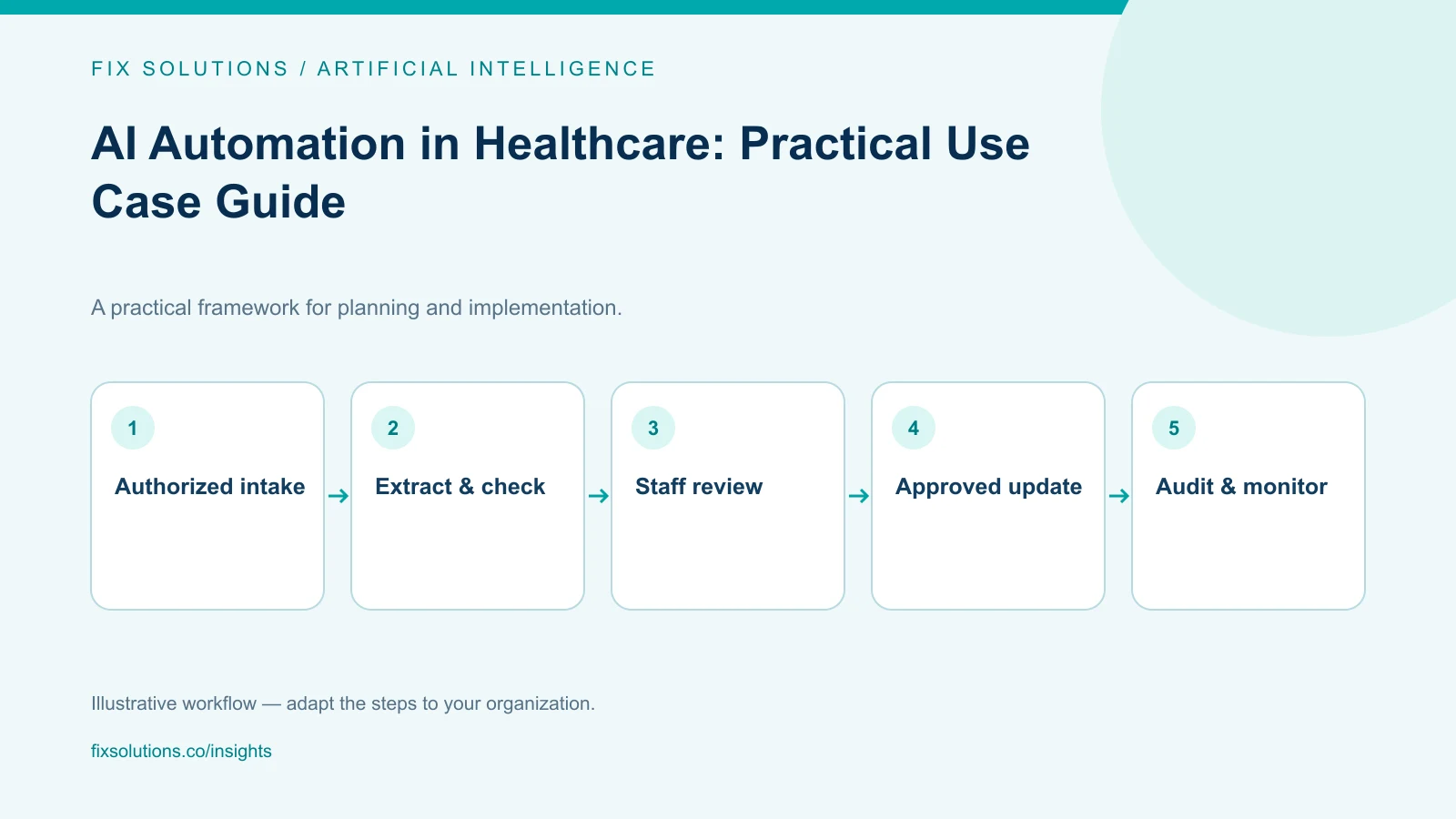
AI Automation in Healthcare: Practical Use Case Guide
Explore AI automation in healthcare operations, from document intake to scheduling, with human review, integration and evaluation controls.
Read articlePractical industries guides from FIX Solutions, with implementation checklists, primary sources and clear next steps.
Browse articlesClear explanations, practical checklists and primary-source references.
Explore AI automation in healthcare operations, from document intake to scheduling, with human review, integration and evaluation controls.
Read articleStart with a recurring operational problem, not a technology purchase. Map the people, data and systems involved, agree on a measurable outcome, and test one workflow before expanding. The constraints differ by industry: a delayed shipment, an incomplete learner record and a patient scheduling error need different controls.
Connect course delivery, learner records and progress reporting before adding more tools. Review role-based access, accessibility, peak enrolment demand and integrations with existing administration systems. Pilot with a defined learner group and measure completion, support requests and staff workload.
Explore education solutions →Identify where dispatch, tracking and inventory records lose synchronization. Define the source of truth for each status, then test exception handling, delayed updates and manual recovery. Useful pilot measures include reconciliation effort, delivery exceptions and time spent chasing shipment updates.
Explore logistics solutions →Prioritize consistent product, stock and order data across sales channels. Map checkout, payment confirmation, fulfilment and returns as one journey. Test inventory conflicts and failed payments before rollout, and compare conversion, cancellation and support metrics against a documented baseline.
Explore retail solutions →Begin with a bounded administrative workflow such as intake or scheduling. Define who can access records, where human review is required and how errors are corrected. Assess privacy and regulatory obligations for the actual deployment; automation alone does not establish compliance or clinical safety.
Read the healthcare automation guide →Document a baseline, a named process owner, representative test cases and an agreed acceptance threshold. Include failure cases and an operational handover, not just a successful demonstration. Review ongoing support, integration costs and data ownership before deciding whether to scale.
Use our PoC versus MVP guide to define scope and our digital transformation playbook to plan ownership and adoption. These are planning frameworks, not claims of client results.
Bring a workflow, a technical constraint or a growth question. We will help define a useful next step.
Discuss your project